
40 Million People Use ChatGPT Every Day for Health Topics
OpenAI reveals that over 5% of ChatGPT messages are medical queries. Discover how AI is transforming healthcare with surprising data.
Over 5% of all ChatGPT messages worldwide are about health.
1 in 4 users makes at least one medical query each week.
40 million people turn to this AI daily with health questions.
OpenAI just published “AI as a Healthcare Ally”, revealing surprising data about AI use in healthcare.
Key Numbers
- 2 million weekly messages about health insurance: comparing plans, understanding prices, managing claims.
- 600,000 weekly messages from underserved rural communities in the U.S.
- 70% of health conversations occur outside clinical hours (8am-5pm).
Documented Real Cases
Remote Diagnosis
A woman in San Francisco coordinated urgent care for her mother in Indonesia using ChatGPT. The AI alerted about a possible stroke. The patient measured her blood pressure, confirmed the risk, and went to the hospital. A doctor validated the diagnosis. She has recovered 95% of her vision.
Victory Against Insurers
A patient in Seattle with an autoimmune disease used ChatGPT to find scientific studies and won the appeal against his insurance denial.
Professional Use Skyrocketing
Healthcare professionals have massively adopted AI:
- 66% of American doctors use AI (it was 38% in 2023)
- 46% of nurses use it weekly
- 21% of doctors use it for documentation and billing codes
- 75% consider it improves their efficiency
- 72% believe it helps with diagnosis
Access in Rural Areas
OpenAI analyzed areas more than 30 minutes from the nearest hospital:
- Wyoming leads with 4.15% of messages from these areas
- Oregon has the highest absolute volume with 54,660 monthly messages
Beyond the Chat
AI use in medicine goes beyond chatting with ChatGPT:
- Researchers use OpenAI models to repurpose approved drugs for untreated diseases
- Cellular reprogramming for Parkinson’s
- Educational platforms to train clinical reasoning
OpenAI’s Proposals
OpenAI proposes:
- Securely connecting public medical data
- Building infrastructure to validate AI-designed molecules
- Clarifying FDA regulations for medical devices with AI
Sources
Can AI become a tool for healthcare equity, or will it widen the gap between those with access to technology and those without?
Related articles
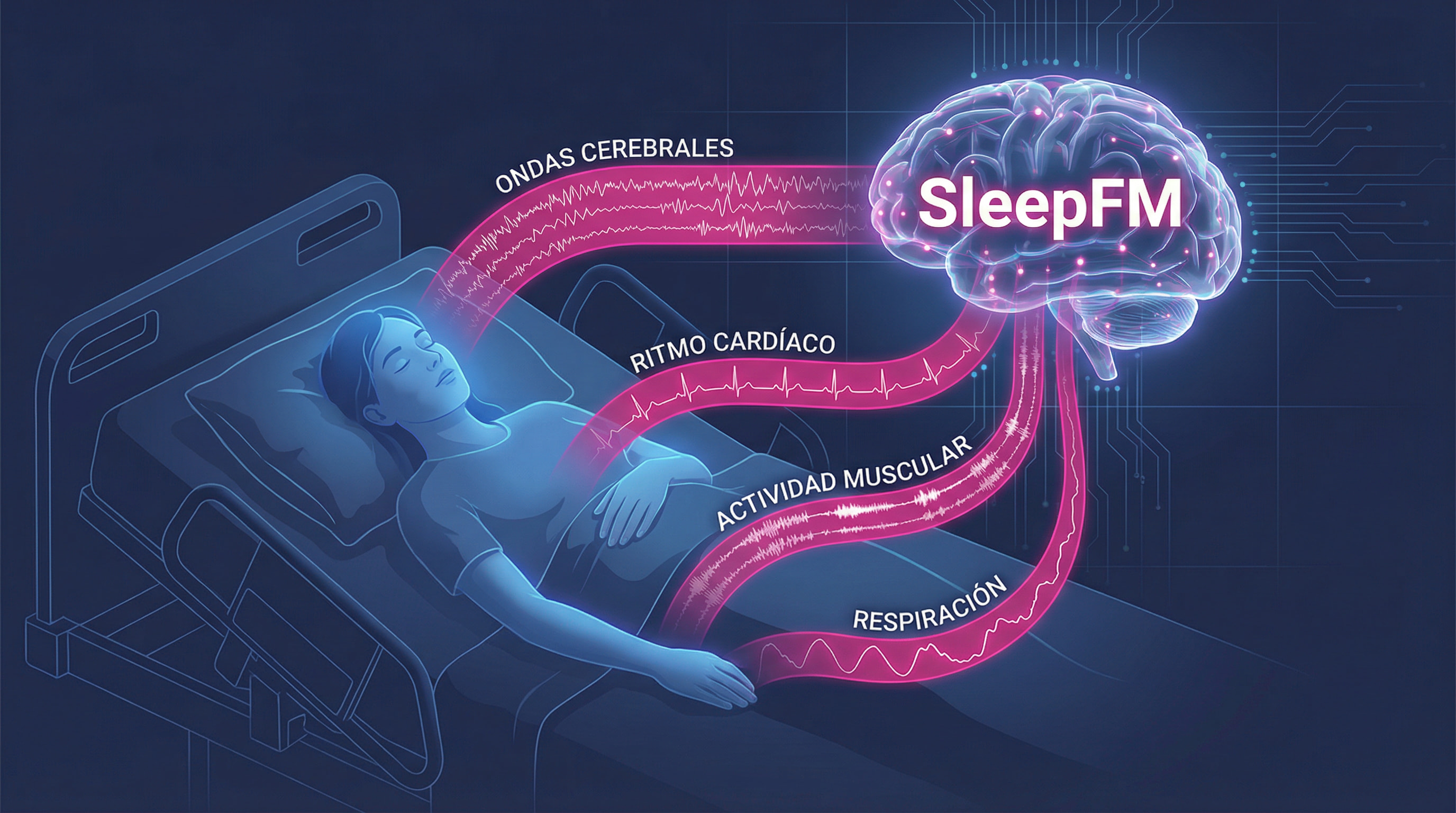
SleepFM: Stanford's AI That Predicts 130 Diseases While You Sleep
An artificial intelligence model analyzes a single night of sleep to predict your risk of dementia, heart attacks, Parkinson's and over 130 diseases.

Claude Cowork, Medical AI and the Google-Apple Alliance: 3 News That Redefine the Industry
Anthropic launches Claude Cowork and Claude Health, while Google and Apple close a historic deal. We analyze the three moves shaking up the AI sector.


Psilocybin Rewires the Brain: Scientists Discover How It Breaks Depression Patterns
Cornell scientists map for the first time how a single dose of psilocybin reconnects neurons and breaks negative thought loops in depression.